Its better to change an opinion than to persist in a wrong one
Socrates
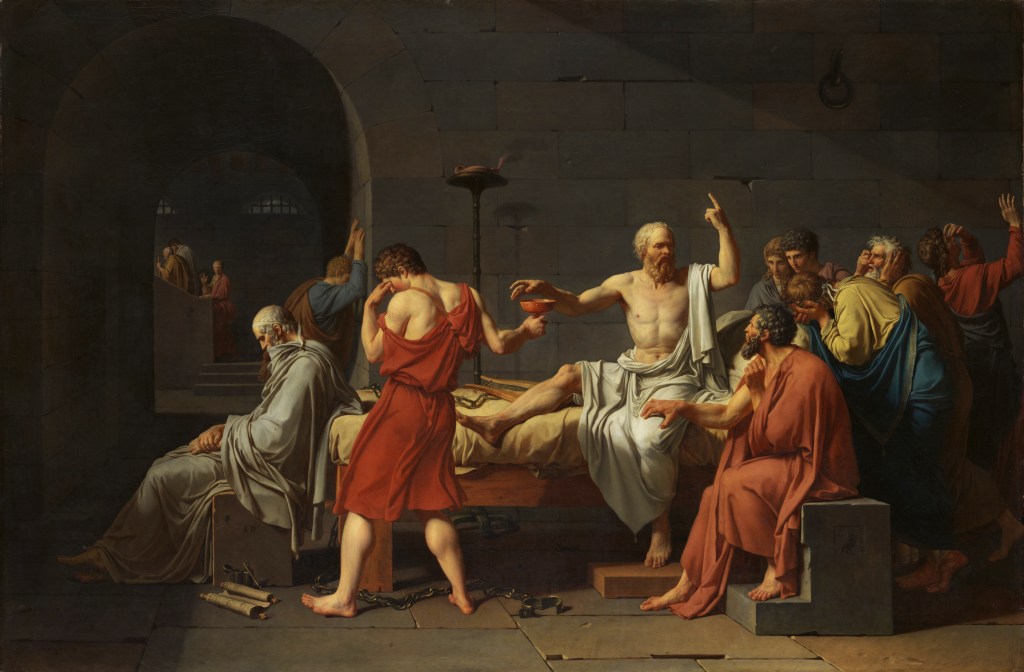
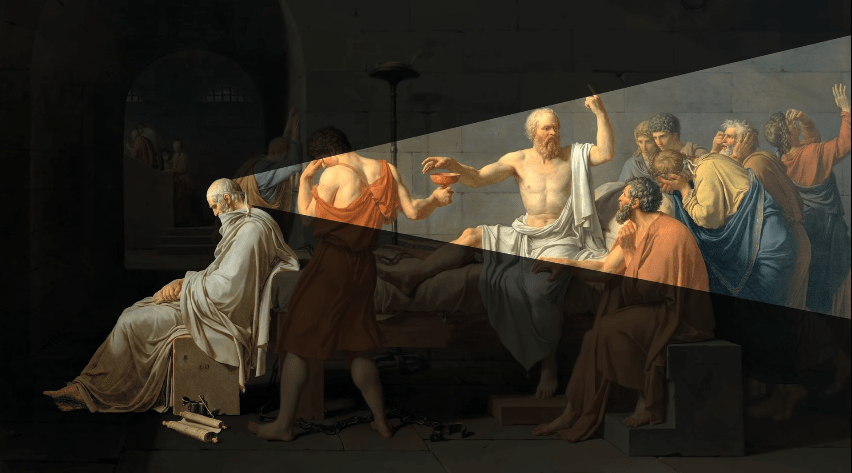
While the fear of losing a noble person is instilled in the minds of people, the man withstood the pain of death to save his ideals from being shattered. The Greek philosopher from Athens is in his last moments sitting upright, facing death with no fear in his eyes. The air in the prison gets enlightened with the light from the Sun-god falling on the man in white robes, Socrates. Reaching out to God, he prepared himself to consume the poison with no regret. The time is moving slow to save the Stoicism in the land. He will be inside the land soon as a seed, to grow the tree of stoic philosophy and spread the fruit to the universe.
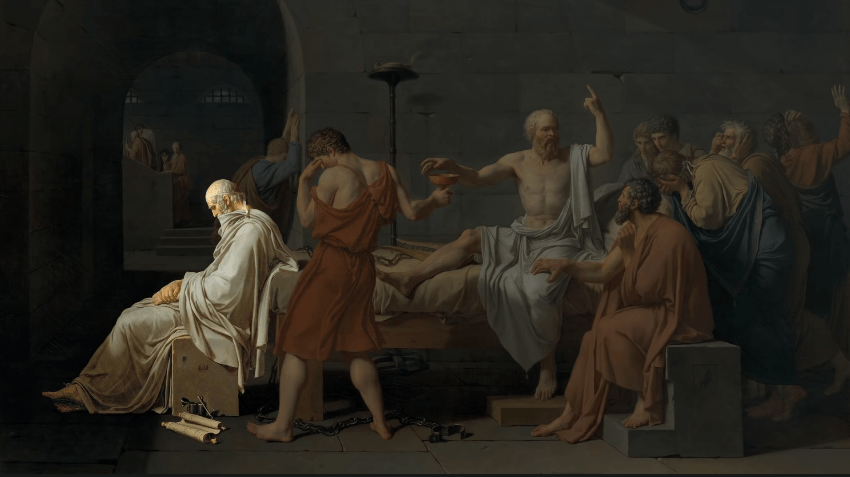
The Death of Socrates is a neoclassical painting created by French painter Jacques Louis David in 1787. This painting currently in the Metropolitan Museum of Art, New York
Story of Death
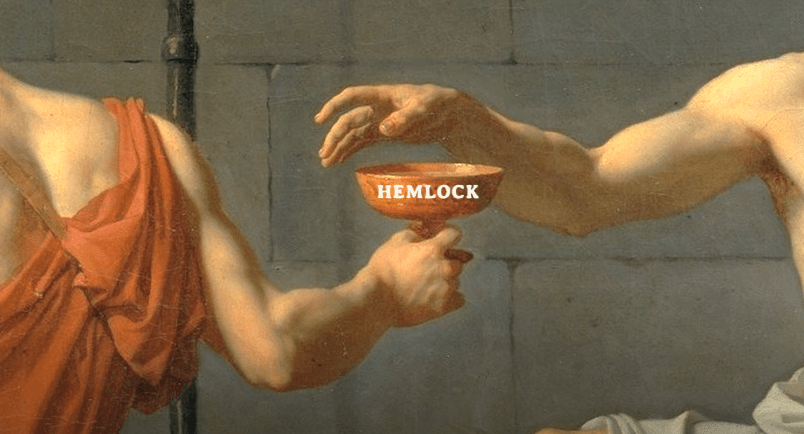
Socrates, also known as ‘Gadfly’ who believed that he was sent by the Gods to sting the status quo. He was sentenced to death by poison for failing to accept God that is acknowledged by the people and also for corrupting the minds of youth by his teaching. He was imprisoned and was instructed to drink the hemlock, a poisoned beverage extracted from the herbaceous flowering plant.
Painting backdrop
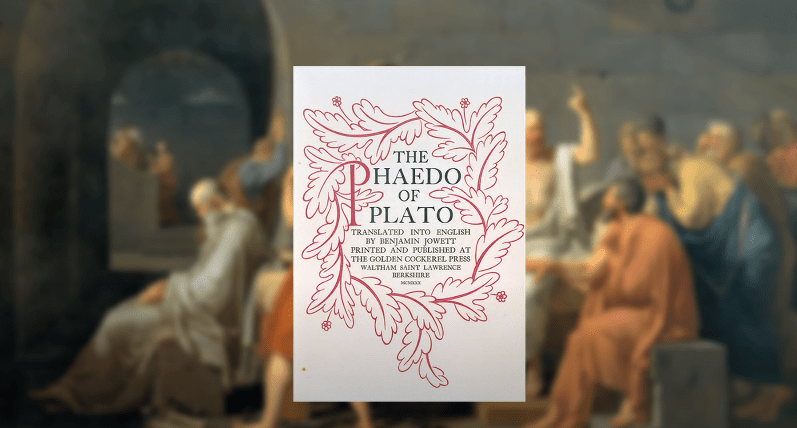
The scene depicted in the painting happens inside the prison with Socrates being the centre of the masterpiece. There is tension in the minds of people surrounding Socrates. The contrast can be seen in the face of Socrates. Plato wrote this play in his dialogue on the soul, the Phaedo.
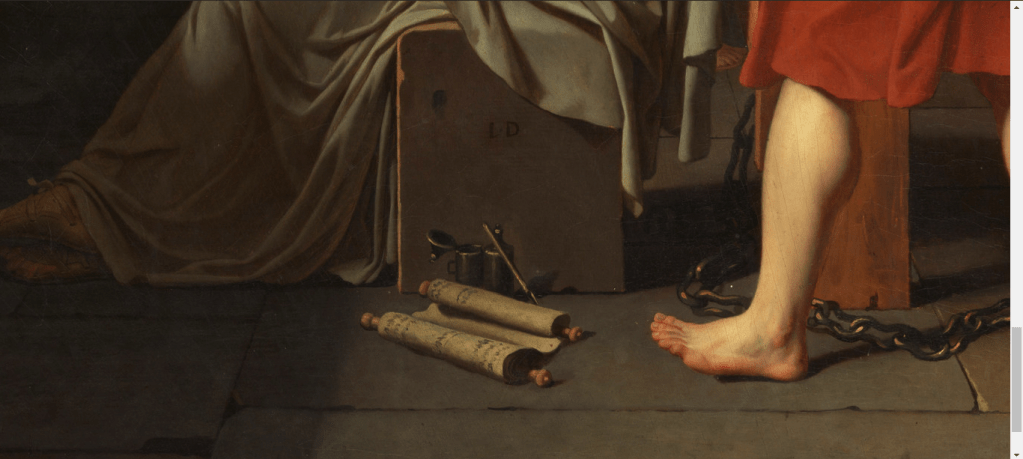
The prison throws up a dull outlook with a bare grey stone wall and top roof windows in the room behind. The prison is old as we can see the missing pieces from the broken walls and floor. The light stand has a burning thread that is fading away, does it remorse for the death? There can be metal chain holder seen on the walls which might be used to chain up Socrates and there can also be shackles seen below the bed. This is a symbolic illustration set by David to imply that Socrates is freed from the ideology of Government and its society.
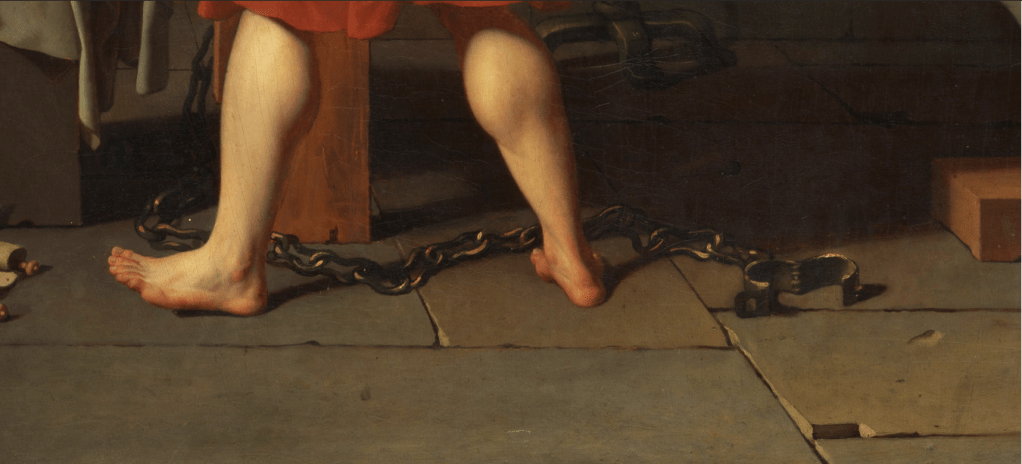
Broken Shackles 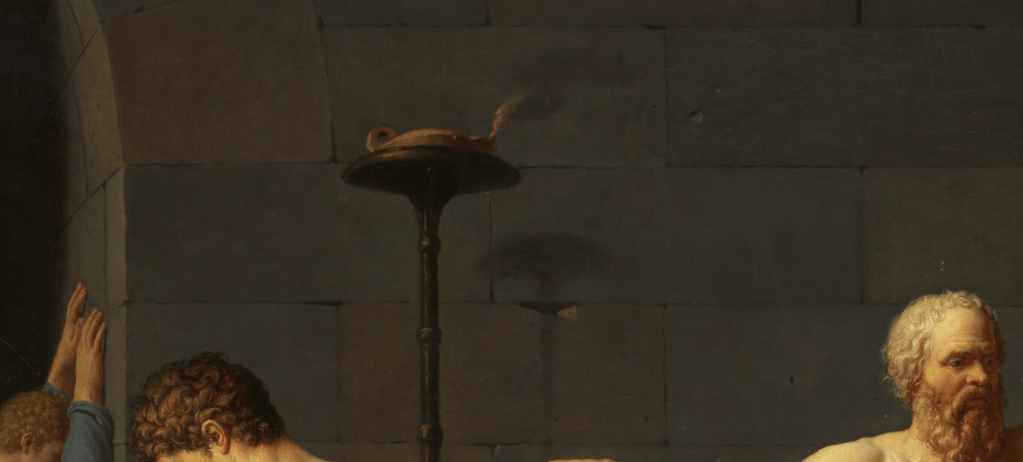
Fading light 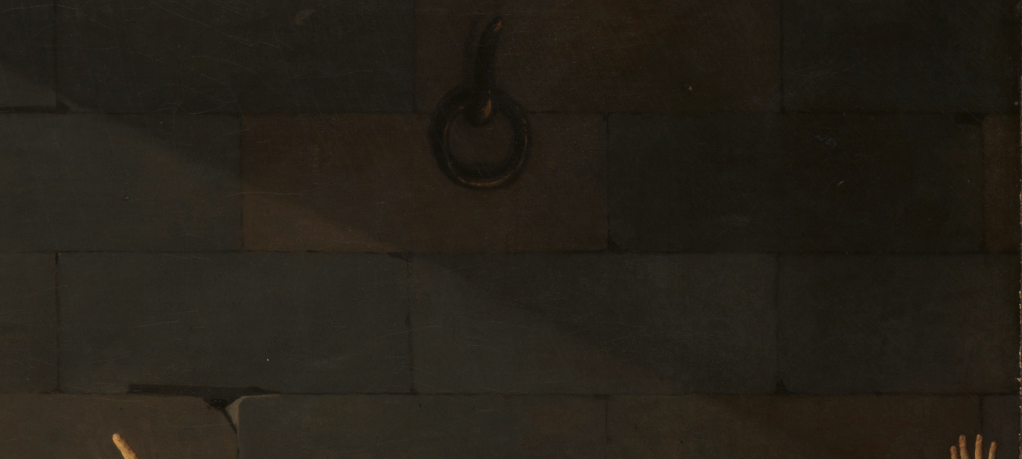
Old wall
Nature has given us two ears, two eyes, and but one tongue-to the end that we should hear and see more than we speak.
Socrates
Dance of colour and light
The spine of this painting is Socrates and his executioner. While all the colours on the wall and robes of people surrounding them are dull they have a saturated colour given to their clothes. White for Socrates signifies the strength of his stoic ideals even in the moment of his death, metaphorically it also denotes the colour of robes which were worn by the people in heaven and quite a contrasting part is where the executioner wore red robe which is the colour of the devil in hell. It denotes evil, hatred and agony.
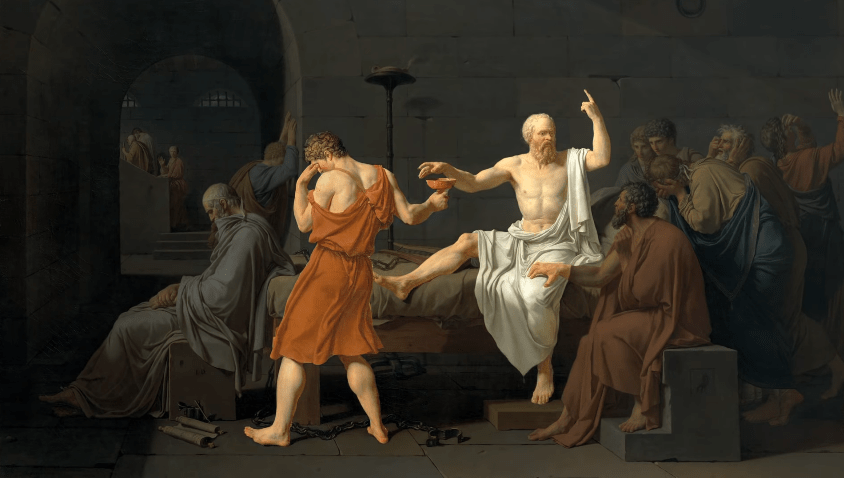
We can also guess there is a window on the top left that invites the sunlight to shower on Socrates and his bare body emits the shining tone of bare body. There is a sharp division of light in an acute angle where the important characters come inside the geometric figure.
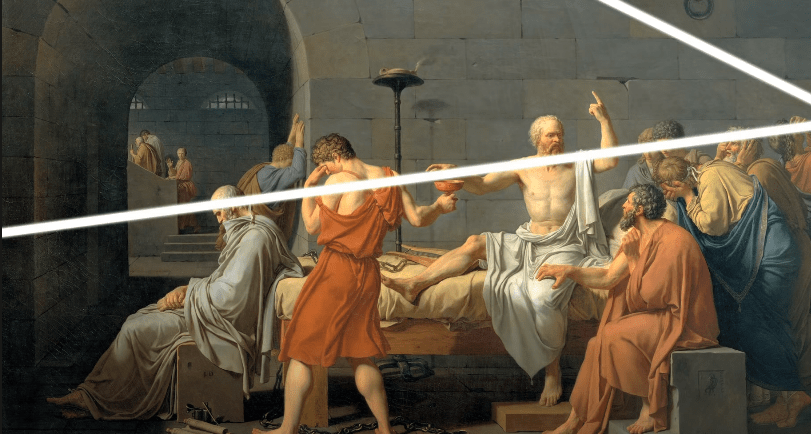
Play of Emotions
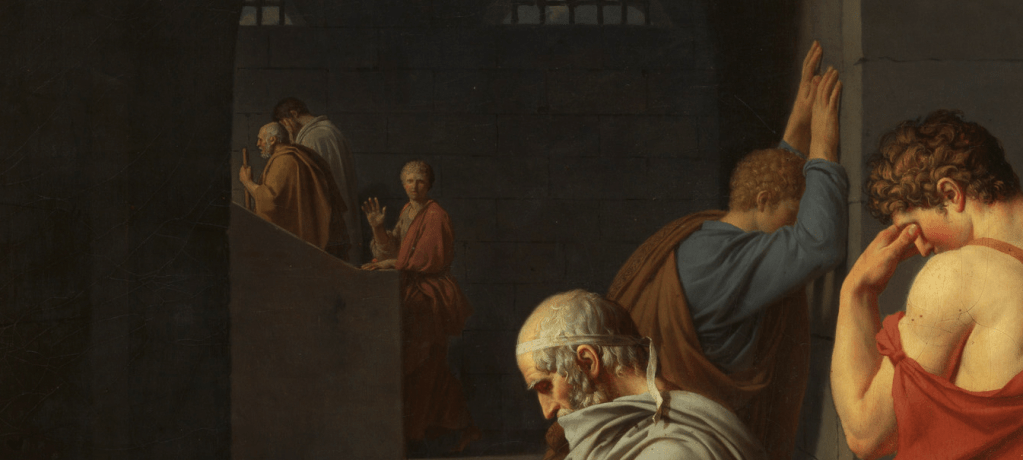
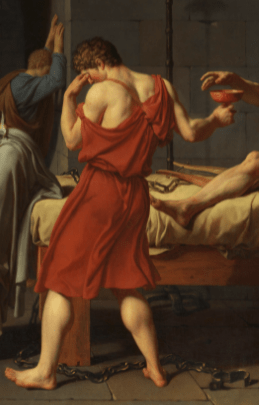
Reading this art from left to right we can see that the person in red and blue robe facing the dark side with fingers on his eyes. He wishes not to see the excruciating pain Socrates is going to undergo after he drinks the poison. There is one more person who is facing the opposite side is the person who leans on the wall, Apollodorus. He leans his face over the wall and doesn’t like to witness the departure of stoicism.Behind the room Xanthippe, the wife of Socrates waving Goodbye to her beloved husband while the men before her are moving with the misery which can be seen from their tears.
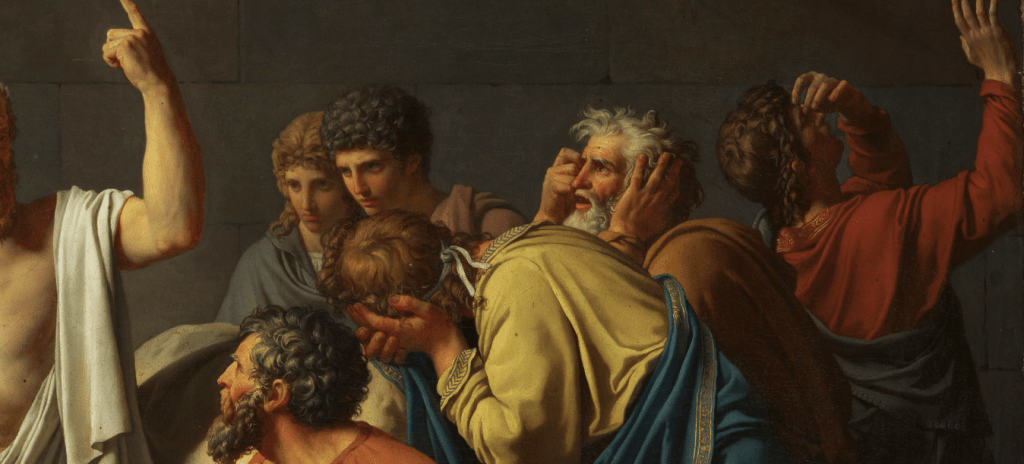
There are two pupils of Socrates behind who are keen on what Socrates is trying to convey, they are focused on what he was about to teach. The cup of knowledge of his disciples was empty to listen to his last words of freedom from the earth. The old man on the left of these youth looks confused or may be startled by the actions by Socrates of accepting death positively. The next person leans over his palm who neither seem interested in what Socrates say nor wishing to see him leave.
The man who clutches Socrates legs and looks at him with a heart full of sorrow is Crito, a friend of Socrates. His look conveys that he doesn’t want Socrates to drink the death potion.
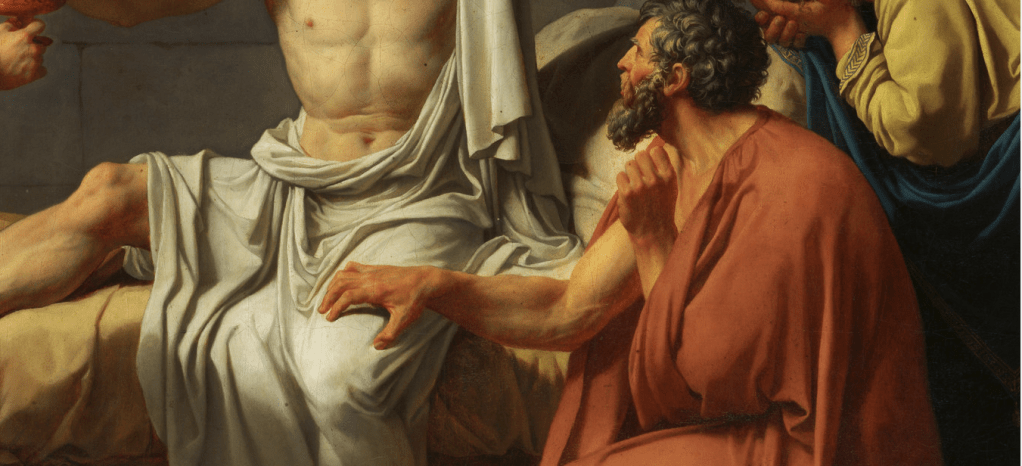
The executioner’s expression is daunting as he turns away his gaze from Socrates. The disappointment in the air surrounding him can be felt in the painting. The restless of the executioner can be seen from his leg where the toe tip is above from the ground like he wants to withdraw handing over chalice of death to Socrates. The gap between the hand and chalice being the centre of this painting has the high potential pressure which falls over the executioner in distress.
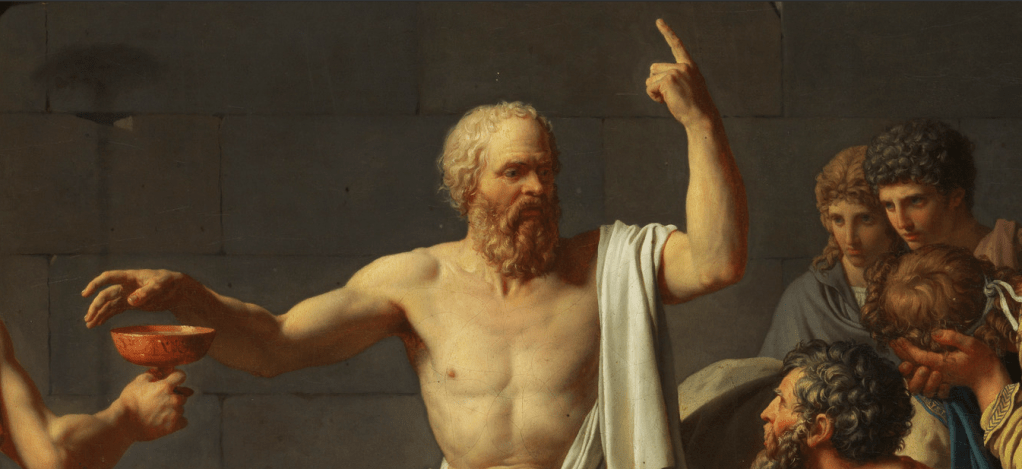
Socrates has been given the core focus on the painting with his toned muscles and his left finger pointing up with his right hand hovering over the chalice. The hand pointing above exhibits that he is ready to visit the Gods, leaving his cocoon on earth. Also, Socrates was designed in a way that his body is angular in structure while the people who mourn around him are curved which can be the way to express the strong and weak. The eyes of Socrates are stubborn and confident that he withstands his ideals and they shall not be crushed while his spirit is alive and beyond.
The old man sitting before the bed has his head bent in misery as he closes his eyes and the dream becomes the painting. Who is the old man?
If you don’t get what you want, you suffer; if you get what you don’t want, you suffer; even when you get exactly what you want, you still suffer because you can’t hold on to it forever. Your mind is your predicament. It wants to be free of change. Free of pain, free of the obligations of life and death. But change is law and no amount of pretending will alter that reality
Socrates
All but Memory
The old man is Plato, the man who staged Socrates as the protagonist in 30 philosophical dialogues. Without Plato, there will be no Socrates. He has spread the teachings of Socrates all around the world and now in distress sitting in front of the bed. But in reality, Plato wasn’t there at the time of Socrates execution. He was a young man with a thirst for knowledge.
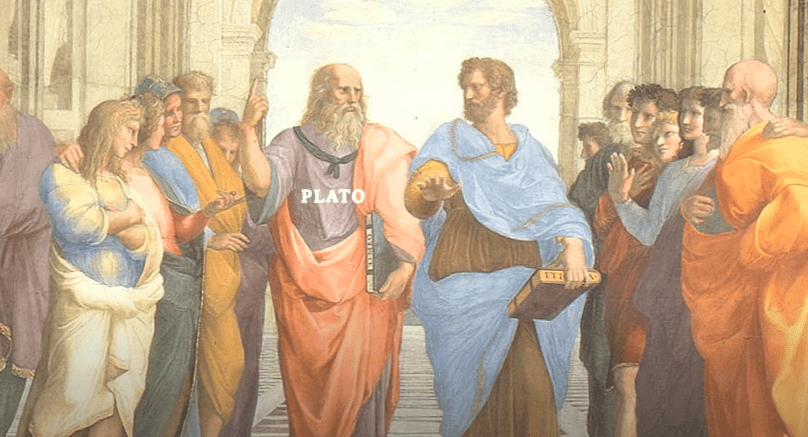
Like Socrates pointing his fingers to the sky, Plato can be seen with his fingers pointing up in Rafael’s School of Athens painting. There is a poetic way in placing wall behind Socrates where the philosophy is being stopped and the path behind Plato where his philosophy is being continued in the rightful hand to spread.
The whole painting can be seen as a projection from Plato’s head as if this scene is being played from his memory. Socrates was reborn as Plato and spreading the wisdom through his body which can be seen in the pen and paper below Plato as the responsibility to spread his words lies on him.
Only the dead have seen the end of war.
Plato
Inaccuracies in Painting
The painting has been talked over as a poor representation of the historical event. Starting with Plato not being in the actual scene and he wasn’t actually old as depicted in the painting. Also Apollodorus, the man slating against the wall was not there in this scene as he was sent out by Socrates since he was highly emotional.
Signature 1 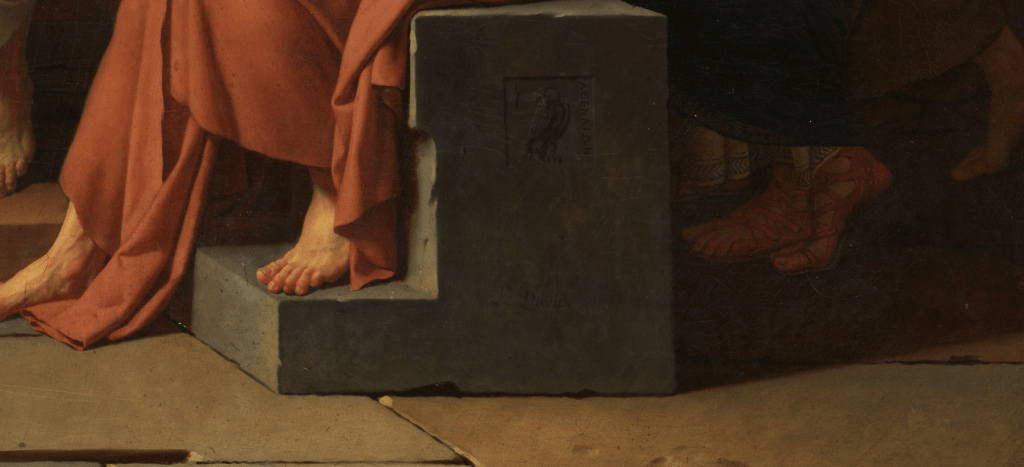
Signature 2
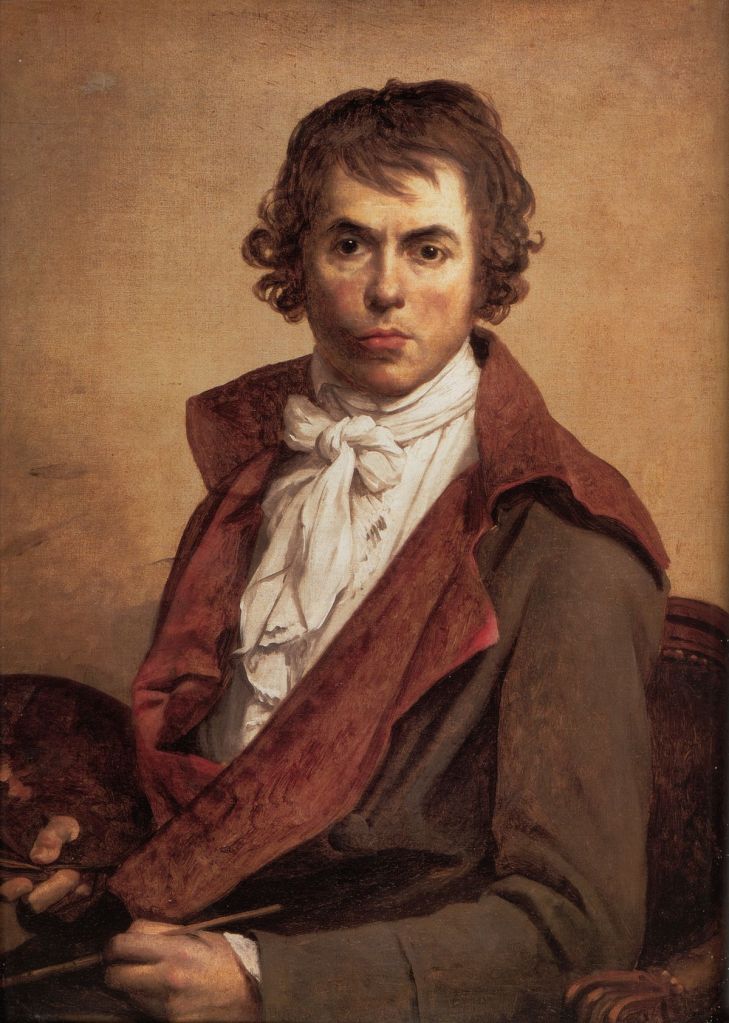
There were two signatures of Louis David, one below Plato which are initials. The place where the memory projects into painting and the other signature can be seen with the name “L.David” below Crito. The artist sees himself as Crito in this painting who doesn’t want to let Socrates leave his friend. The way Socrates portrayed in this painting is quite muscular. But in reality, he was old and not so toned
This painting has been created with the mixture of beauty, political, classical and philosophy in an poetically subtle way to etch the picture in the minds of stoic followers.
To fear death, my friends, is only to think ourselves wise, without being wise: for it is to think that we know what we do not know. For anything that men can tell, death may be the greatest good that can happen to them: but they fear it as if they knew quite well that it was the greatest of evils. And what is this but that shameful ignorance of thinking that we know what we do not know?
Socrates

 Musée du Ben
Leave a comment